
Clinical Pharmacology
REXULTI® (brexpiprazole) targets 3 neurotransmitter systems
The only atypical antipsychotic indicated for agitation associated with dementia due to Alzheimer's disease with a high binding affinity to norepinephrine, serotonin, and dopamine receptors1,a
REXULTI acts as both a partial agonist and antagonist1,b
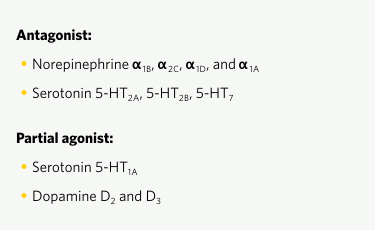

The mechanism of action of REXULTI is unknown. However, the efficacy of REXULTI may be mediated through a combination of partial agonist activity at serotonin 5-HT1A and dopamine D2 receptors, and antagonist activity at serotonin 5-HT2A receptors.1
REXULTI interacts with 3 key neurotransmitter systems implicated in agitation associated with dementia due to Alzheimer's disease2
The activity of these compounds is based on in vitro data. The clinical significance of the in vitro data is unknown.3
The pharmacology data of REXULTI do not provide further insights on the mechanism of action.
aHigh binding affinity Ki <1 nM.1
bThe binding affinity of brexpiprazole was determined in vitro in cells overexpressing human receptors and is expressed as an nM concentration with lower values representing higher affinity. High binding affinities included norepinephrine (α1B-adrenergic=0.17 nM, α2C-adrenergic=0.59 nM, α1D-adrenergic=2.60 nM, α1A-adrenergic=3.80 nM), serotonin (5-HT1A=0.12 nM, 5-HT2A=0.47 nM, 5-HT2B=1.9 nM, 5-HT7=3.7 nM), and dopamine (D2=0.3 nM, D3=1.1 nM) receptors.1
5-HT, serotonin; D, dopamine; Ki, binding affinity; nM, nanomolar.
References: 1. Maeda K, Sugino H, Akazawa H, et al. Brexpiprazole I: in vitro and in vivo characterization of a novel serotonin-dopamine activity modulator. J Pharmacol Exp Ther. 2014;350(3):589-604. 2. Liu KY, Stringer AE, Reeves SJ, Howard RJ. The neurochemistry of agitation in Alzheimer's disease: a systematic review. Ageing Res Rev. 2018;43:99-107. 3. Ross EM, Kenakin TP. Pharmacodynamics: mechanisms of drug action and the relationship between drug concentration and effect. In: Hardman JG, Limbird LE, eds. Goodman & Gilman's The Pharmacological Basis of Therapeutics. 10th ed. McGraw-Hill;2001:31-43.